
Now...and then
The agonies and (occasional) ecstasies of writing biography, and the differences between doing this 30 years ago and in the none-too-sunny 2020s

This is an edited version of a talk that I recently gave for The Algae, a literary group at the Athenaeum Club
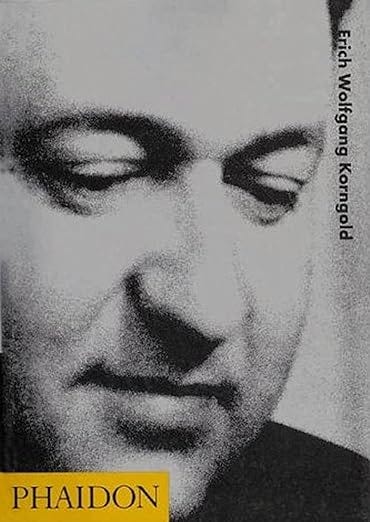
I recently noticed that almost 30 years had gone by between the publication of my first book, a biography of the composer Erich Wolfgang Korngold, and my most recent one, last year, of the pianist Dame Myra Hess. In between, I’d been writing fiction, some librettos for opera and a heap of music journalism and coming back to biography was far from as straightforward as I’d blithely expected.
To put it bluntly, nearly all the ways and means had changed. So I thought it might perhaps be mildly entertaining to take a look at the pros and cons of these changes and the new challenges they pose. Of course most of you know all of this already, but maybe it’s not often that we have a chance to set things out, discuss them and ponder where we go from here.
My biography of Korngold came out in 1996 and I did most of the research in 1993, the year before my mother died, which is now more than half my life ago. I was probably too young and green to undertake such a thing, certainly too young to have a clue of the real size of the mountain I intended to climb. I just thought that, well, it wasn’t going to be an enormous or academic book and it was a story that I was longing to tell, one that at the time was not well known. “Korngold? Who’s he?” said…nearly everyone.
“Korngold? Who’s he?”
Briefly: Korngold started off as a wunderkind composer in Mahler’s Vienna. He became a controversial superstar, and of course in the 1930s he fell foul of the Nazis because he was Jewish. He was lucky enough to be invited to safety in Hollywood by the director Max Reinhardt; there Warner Brothers persuaded him to start writing original film scores. He went on to become one of the chief creators of what we think of as the Hollywood sound. For decades, critics heaped scorn on his concert works and operas because they thought it sounded like film music. The truth is that Korngold doesn’t sound like film music. Film music sounds like Korngold. In the 1950s he attempted a come-back in Europe and the concert hall, only to find himself considered old-fashioned, insincere or suchlike because of the films (never mind that they had literally saved his life and those of his family), and otherwise forgotten. He died aged 60 in 1957.
Back in 1993, the Internet existed, but it wasn’t what it is now. To find the Korngold family, I went through friends of friends, contacts of contacts and in one case sheer serendipity: the extremely kind senior music critic who had offered to put me up in Los Angeles knew them and put in a good word for me. Letters were written and sent across the Atlantic in the post, and off I went to Hollywood.
Real reel to reel
To look at Korngold’s film score manuscripts, I went to the University of Southern California – microfiches were there none. To see the films themselves, some of which had fallen into obscurity, I used a reel-to-reel machine in the basement of the UCLA film school, changing the reels every so often from big flat tins.
I spent intense time in the Academy of Sound and Motion Picture Sciences library, investigating Korngold material in their archives, without much clue what to expect. I flew to Portland, Oregon, to stay at the family home of Korngold’s elder son, and talked to him for several solid days. I also made my first visit to Vienna and nearly wore out my feet and brain.
Back in London, I visited the publishers Weinbergers, rooting through scores of Korngold’s adaptations of other composers’ operettas in search of useful nuggets – which did actually turn up: I was amazed to spot the march theme from The Adventures of Robin Hood lurking in his version of Leo Fall’s Rosen aus Florida. It was in waltz time, in a beauty pageant scene where it accompanied the arrival of Miss Austria.
As for recordings, CDs were emerging, but not plentiful; some were wonderful, others less so. Lots of score-reading, lots of time hunting through library shelves and card catalogues, tracking down academic papers about this then rather obscure, unfashionable figure, who was frequently scorned by people who tended to parrot Third-Reich slurs against him because they had only received opinion to go by. If a composer’s music is banned across Europe for a decade, sometimes those banning it achieve their aims and squash that music out of existence.
The book was part of a series of 20th-century composer biographies issued by Phaidon, which is an art books publisher. The presentation was beautiful, with quality paper and a lavish quantity of illustrations. A designated picture researcher was assigned and I went to her house to sift through photocopies to select the best images.
When the book came out, it had a couple of nice reviews in music magazines, printed of course. Then something funny happened.
Rogue reviewers
Amazon had been invented – it was still just an online bookshop, I think – and around that time they opened up the site to reader reviews, which were allowed to be anonymous. Almost at once, a rogue nasty appeared on my unfortunate little book. Anonymous, of course. I wrote a letter to The Author, the Society of Authors journal, saying that Amazon’s anonymous reviews made nonsense of the whole idea of reviewing a book and mentioning that I could hazard a good guess as to where this one might have come from.
This stuff was so new then that my letter got picked up by the Sunday Times and the Guardian. So, bizarrely, I became one of the first authors to be interviewed grumbling about such things. Eventually Amazon did take down that review. It only took them...20 years. Meanwhile, anonymous reviews absolutely everywhere still make nonsense of the whole idea. Just imagine how different the world would be now if, when the Internet was set up, anonymity had not been permitted…
I wrote a second book for the Phaidon series, this time about Gabriel Fauré. Then for 20 years I concentrated on fiction. But I did have a dream biography that I had longed to write: Dame Myra Hess. When I finally began it in 2019, the landscape I found was completely transformed.
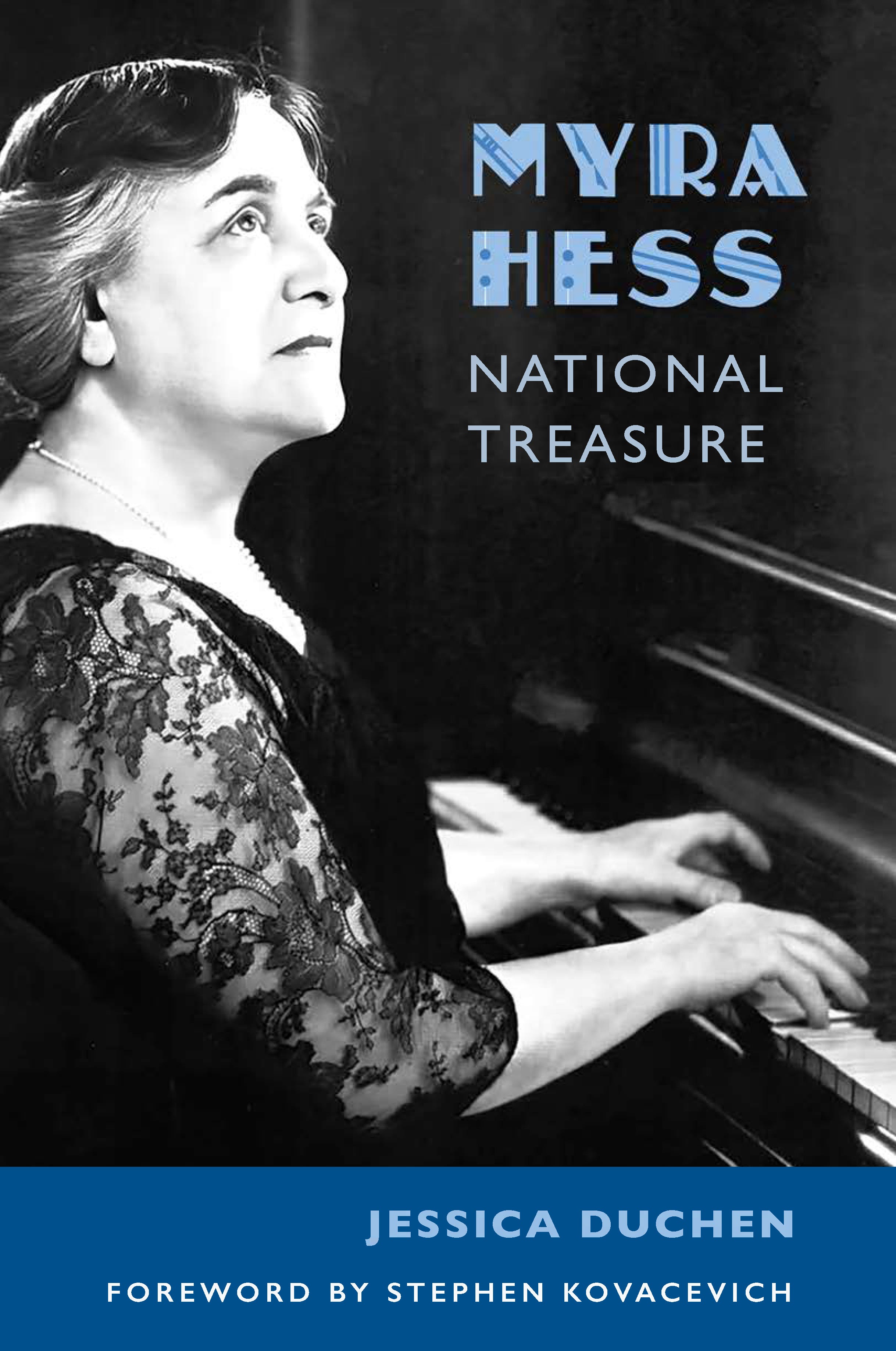
Certain things were the same, notably people. Again, it was vital that I had the support and trust of those close to Myra, notably her star pupil, the pianist Stephen Kovacevich and the composer Nigel Hess, who is her great-nephew and keeper of the flame. They put me in touch with other relatives and former pupils, and various contacts kindly connected me with the families of musicians she had worked with. Some of my older colleagues were extremely generous too in supplying copies of interviews they had done long ago with those performers.
Accessing recordings has become a lot easier: you can stream rare Myra Hess recordings, and indeed rare Korngold, at the touch of a button on countless outlets online. This is not the least reason why Korngold has had such a vivid rehabilitation. When I started that book, nobody seemed to know his name. Now they do, because it is easy for musicians to access recordings of pieces like the Violin Concerto. They hear it, like it and want to play it.
How the heck do we make a living?
The trouble is that for most musicians the economics of streaming don’t add up: the income model determined by the big middle-men streaming services means that those musicians who are not among the world’s highest-earning pop stars are given a minuscule share. I remember the violinist Tasmin Little revealing that for five to six million streams, her income amounted to £12.34. This issue is raised again and again, but nobody ever seems able to actually do anything about it. Currently, while we can listen more easily and in greater numbers than ever, we’re also doing less than ever to support the musicians and experts who make those recordings or make them available.
Then there’s the change in access to documentation. You can write to an American university and for a small fee get them to send you, electronically, the archive items that you need. You don’t even have to leave your study, let alone cross the US from coast to coast (which Myra Hess did about forty times). In Britain, her main archives were in the British Library and I spent happy hours in the rare books and music room with them. But watch that space…
Then there’s books. New books. Library books. Second hand books. E books. In the 1990s, I’d go to a music library such as the large and welcoming one that used to exist in Victoria and spend the day browsing and taking notes, sometimes following leads from bibliographies, sometimes stumbling across relevant tangential books I didn’t know existed and following the rabbit holes down which they led me.
My study is heaving with second-hand books, sourced online. I calculated that by the time I’d travelled into central London, had a coffee and a sandwich and travelled home again, it would have been cheaper to buy a beat-up copy of the book I wanted and then I could keep it in perpetuity and scribble notes in its margins. Result? I’m fresh out of shelf-space. Solution? E-books.
But then… along came Internet Archive and any number of ‘free’ ‘library’ sites where you can simply download… a book. Millions of books. For nothing. What do we do now? As authors we’re already struggling to be paid anything at all in the systems that seem to strangulate us in new ways every day. Therefore we want to spend less on research, which is time as well as money. If you want to access just two or three pages of a book, you don’t necessarily want to spend time tracking it down or money buying a second hand copy plus postage. So do we use these tempting facilities – quick, easy and unfortunately for writers, free? We recognise that others will be doing the same thing to our own books and we too will not be paid for the privilege of people reading and quoting our work. It’s alarming to realise that there are advantages for us in participating in our own downfall.
Not that kind of closure…
Speaking of downfall, the next issue that arose in my Myra Hess saga was the pandemic. Disaster: the British Library was shut. For months and months. The upside, however, was the rapid advent of video call technology that enabled me to interview Myra’s surviving pupils wherever they were in the world. But still more valuable was something totally analogue: one of Myra’s relatives held privately some boxes of archive material that included rare photographs, letters and a sheaf of Myra’s postwar American diaries that had previously been thought no longer to exist. He brought them round and graciously allowed me to hang on to them until the book was finished. That’s why Myra’s passport sat in my blanket box for a couple of years. Nothing electronic could ever replace the most valuable thing of all: the trust of the family to allow me to use this extraordinary material.
In the end, something worse still proved the overriding value of good old-fashioned paper. Back at the British Library, there was a cyberattack in September 2023. I understand it was a ransomware attack and it knocked out all their digitised systems. The ransom was of course not paid and it took a very, very long time for such vast quantities of material to be rebuilt. I’m not sure if they are fully operational now.
I don’t think many people who don’t use the BL regularly appreciated what a calamity this was. It was an attack on all our culture, research, history and heritage, because that is what’s stored in there and the entire archive access system had been digitised. Nobody could get at them. My guess is that whoever made that attack knew exactly the cultural significance of the place and its contents, and I wonder if they also may have known something about the potential state of its computer systems.
We underestimate these matters at our peril. If we as a country refuse to recognise the value of cultural heritage, if we don’t fund it properly to be kept up to date and secure, then we are opening ourselves to the most alarming of attacks: those, I believe, that target our national soul. The encroachment of AI is threatening to do something not dissimilar in the creative arts, though we should recognise its value in medicine and scientific research.
The manuscript in the garden
What price going digital? Yes, it makes life easier. We can read, listen, communicate and download at the touch of the proverbial button – but we are inevitably participating in a system that seems set up to wreck our livelihoods. Meanwhile, if we don’t write actual physical letters any more, how will our era be researched in the future? If the income of our creatives is shot to pieces, will there be anyone left worth researching? And how can the lessons of today be learned, assuming future generations even want to try? If, heaven forfend, our institutions and data centres were blown up, this stuff would be essentially irreplaceable.
Of course, paper burns too. But I read, for example, a thorough and devastating testimony about the impact of World War II in Vilnius, Lithuania: a diary kept by a librarian, which survived because he buried it in his garden before he was arrested and killed.
I’m not sure you can do that with digital stuff. Even if you did bury a memory stick under your apple tree, by the time it’s dug up there might be none of the right technology left on which to access it. I have stacks of cassette tapes in my attic, recordings of my interviews with some of the greatest musicians of our time, but digitising them would probably take a year or two - and last time I tried, the tape was no longer in playable condition.
So, 30 years apart, my first book and my most recent one came into the same world, but seemingly via different planets. Where does this leave us? We’re damned if we go digital but also damned if we don’t. The one reassuring thing is that even now there is no substitute for personal human bonds of trust and respect.
And here I am, writing all about it on Substack…